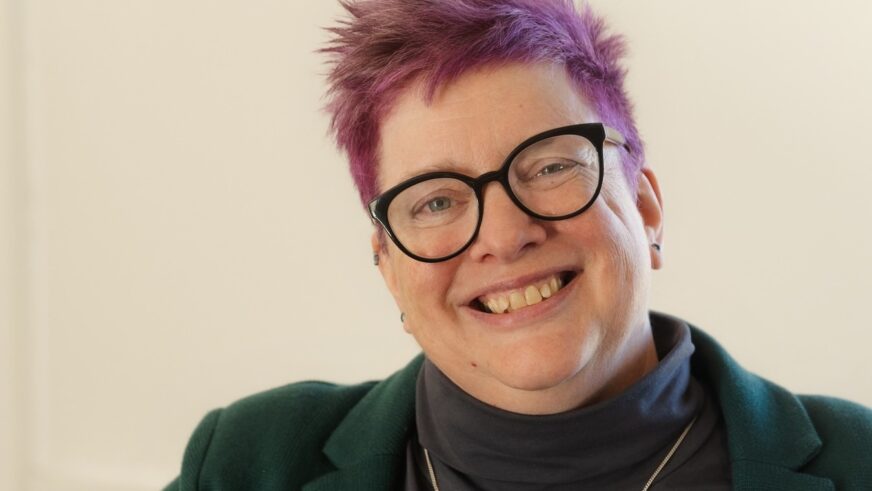
Cathy Brown has had a long and impactful career in the social economy space, from running national organisations to delivering international keynotes and shaping workplace policy. But behind her professional success, she was navigating undiagnosed ADHD and autism, both of which created executive functioning challenges that impacted her day-to-day life at work.
Since accessing support after her late diagnosis at 53, Cathy has established more sustainable ways of working, reconnected with her confidence, and modelled inclusive leadership in the organisations she leads.
About Cathy Brown
Cathy is the Head of Economic Justice (Birmingham) at the Barrow Cadbury Trust. Before that, as CEO, Cathy led Birmingham’s Initiative for Social Entrepreneurs, where she championed inclusive business models and stronger workplace cultures. With over ten years of experience in the voluntary and social enterprise sectors, her career has centred on creating fairer, more people-focused approaches to leadership and economic participation. Previously Executive Director of Engage for Success, the UK’s national movement for employee engagement, Cathy has consistently worked to ensure that people’s voices are at the heart of how organisations grow. Her commitment to improving economic justice in Birmingham is both professional and deeply personal.
Struggling beneath the surface of success
Despite a highly visible career, Cathy describes feeling constantly overwhelmed by core organisational tasks. Underneath the surface of her public role, executive dysfunction made basic admin feel impossible:
“I generally appear very organised. I’m actually not… I’d be forever triple booking myself in a diary, for instance, and then feeling massively unprofessional…”
The mental effort required to keep on top of work tasks, like managing her inbox, scheduling meetings, and completing forms left her exhausted. She describes how allowing herself to carry out her roles at work at a reasonable level took an incredible amount of energy.
“I was mentally burned out a lot of the time. I was very, very tired, and it was starting to take a physical impact on my health as well.”
While she’d always found ways to “make it work”, her late diagnosis of autism and ADHD helped clarify why so many basic work systems felt so difficult. This revelation also offered an opportunity to seek structured, formal support.
Practical, consistent support that adapts to her needs
Cathy began working with support workers through Send It to Alex, starting with daily structure and hands-on admin support. This included short morning check-ins, realistic task planning, inbox management, and body doubling to support deep-focus work. The structure was simple but transformative. Instead of spending hours wrestling with tasks, Cathy could delegate, reprioritise, and focus on higher-level strategy.
“On body doubling calls, we’d divide tasks based on my strengths… my support worker would work on things like managing my inbox, freeing me up to spend that time writing a strategy or doing a research report.”
Over time, the structure and strategies evolved based on Cathy’s changing needs, always built collaboratively and flexibly.
Transforming wellbeing and confidence
Support hasn’t just enhanced Cathy’s productivity; it has also been a turning point for her mental health, energy levels, and sense of self. Where once the thought of managing emails or admin would trigger a sense of failure, structured support helped her challenge those internal narratives, focus her energy on her strengths, and feel more capable. As she puts it, “I no longer feel like I’m useless because I can’t manage my email.”
As a result of her increased confidence, Cathy has been able to draw firmer boundaries between work and rest. Without the constant mental load of unfinished tasks, she no longer starts her week feeling overwhelmed. Instead, she now greets her working day with more clarity and less stress.
She’s free to be the best version of herself, both in and outside of work.
A ripple effect on team and culture
Cathy’s openness about receiving support as a leader has had a positive ripple effect within the teams she works with, as well as the clients they support. “I had the complete support of my board… it was helpful for our clients to see somebody in that position acknowledging a disability… and receiving support for it.”
In both her previous and current organisations, Cathy’s support journey has also driven greater awareness of neurodiversity at an organisational level, including shifts in how teams approach collaboration, accessibility, and internal systems. This positive impact on teams and attitudes contributed significantly towards creating an inclusive workplace when a leader sought support for – and thrived in – their unique neurotype.
The power of long-term, relational support
Beyond practical help, working with support workers over time has helped Cathy deepen her self-awareness and communication skills, empowered her to advocate for her needs, and helped her build meaningful working relationships.
“I don’t think I was expecting to make such strong relationships with my support worker… I would count on them in many ways.”
Support like this isn’t just about task management, it’s about building systems that enable people to show up fully at work, advocate for themselves, and lead more sustainably, on their own terms.
Results & Impact
- Cathy regained structure, focus, and energy through consistent, tailored support.
- She rebuilt confidence and wellbeing, learning to set boundaries and work sustainably.
- Her openness as a leader sparked cultural change, normalising neurodivergent support in the workplace.
"It was helpful for our clients to see somebody in that position acknowledging a disability, and receiving support for it"
• Cathy Brown